Download Mcafee Unlock User Interface Regedit
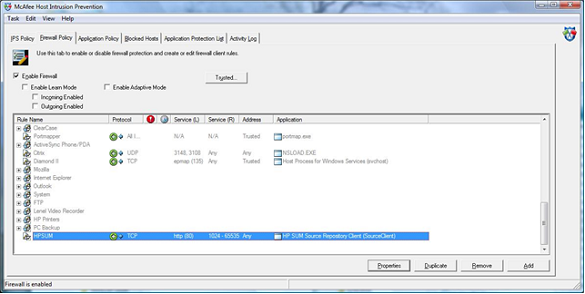
Posted By admin On 08.10.19I had an issue today where I could not wait for Mcafee Epolicy Orchestrator to push out a policy to remove Mcafee Host Intrusion Prevention from a particular Virtual Machine. This Virtual Machine was core to a system that was being worked on and the Mcafee Host Intrusion Prevention was effecting its performance, so action needed taking quickly. The quick work around was to manually remove Host Intrusion Prevention client from the virtual machine, when I attempted to do this I was greeted with the following error.
- Nov 30, 2016 - CVE-2016-4534: The McAfee VirusScan Console (mcconsol.exe) in McAfee. Rules and unlock the console window by closing registry handles. (such as at a command line or via a desktop session or web interface).).
- What is the default password for unlocking the client user interface when troubleshooting the McAfee. To download Winsock fix follow. Default user interface.
Mcafee Unlock User Interface
Self Protect Mode Enabled When self protect mode is enabled you cannot remove the Host Intrusion Prevention until you disable this mode. To disable the self protect mode do the following. Browse to C: Program Files McAfee Host Intrusion Prevention Then run Mcafeefire.exe You will see the screen below, once there select Task Unlock User Interface – you will then be prompted for a password, during the installation you will of either entered on or used the defaults. The default password is abcde12345 Once the password is entered correctly you now need to remove the tick from the following options. Enable Host IPS and Enable Network IPS. Then click apply and these settings will take effect. IPS is now disabled so if required you can leave this now and if you need to remove the IPS you will now have permission to do so.
Remember you will have to break inheritance for this server in Mcafee Epolicy or the policy will reapply at the next policy push interval.
Overview The McAfee Anti-Virus filter scans incoming HTTP requests and their attachments for viruses and exploits. For example, if a virus is detected in a MIME attachment or in the XML message body, the API Gateway can reject the entire message and return a SOAP Fault to the client. In addition, this filter supports cleaning of messages from infections such as viruses and exploits. It also provides scan type presets for different detection levels, and reports overall message status after scanning. Normal Processes the entire message detecting exploits and viruses in the message headers, macros, multi-file archives, executables, MIME-encoded/UU-encoded/XX-encoded/BinHex and TNEF/IMC format files. Gateway chipset drivers.
Performs heuristic analysis to find new viruses and potentially unwanted programs. This is the default scan type. Fast Detects infections in the top level of each message part, such as exploits that use headers and multiple bodies. The detection is less precise, but the performance is better if the top-level object is infected. Multi-pass Combines the Normal and Fast scan types. The Fast scan (pass 1) runs first on the whole message with no cleaning.
With it, you can clean windows registry, remove cache files, fix errors, defrag disk, update windows, and. SmartPCFixer™ is a fully featured and easy-to-use system optimization suite. View and Download McAfee M3050 - Network Security Platform installation manual online. Online interface for Nmap Security Scanner.
Oracle Unlock User
The scanner stops if it finds an infected object, and if the clean type is set to No cleaning, the scanner reports the infection, or otherwise deletes the message. If pass 1 does not detect any virus or exploit, the Normal scan (pass 2) runs with the specified clean type and provides more precise detection. Custom Enables you to set the Custom options described in the next section. This provides compatibility with previous API Gateway versions. A heuristic virus detection algorithm runs a series of probing tests on a file in an attempt to solicit virus-like behavior from it.
Based on the results of these tests, the algorithm can then make an educated guess on whether the file represents a potential threat or not. For example, programs that attempt to modify or delete files, invoke email clients, or replicate themselves all display virus-like behavior and so may be treated as viruses by the scanner. The major advantage of this type of analysis is that new viruses can be detected. With the signature detection method, the scanner attempts to find a fixed number of known virus signatures in a file.
Because the number of known signatures is fixed, new or unknown viruses can not be detected. If this option is selected, the filter runs heuristic analysis on executables only.
Heuristic Macro Analysis. Loading McAfee Updates When the McAfee Anti-Virus filter has been loaded, it searches for virus definitions in the following directory: install-dir conf plugin mcafee datv2 When these have been loaded, it periodically checks for the presence of a directory named as follows: install-dir conf plugin mcafee datv2.new directory. If the datv2.new directory is found, the scanner is stopped and the datv2 directory is renamed to datv2.0. If a datv2.0 directory already exists from a previous rollover, a datv2.1 directory is created instead, and so on, until an unused index is used. This means that the server never deletes the old files, and rolls them out of the way. When the engine is stopped and restarted, any messages that require scanning are suspended until the restart completes.
In addition, an initiated reload is suspended until all currently active scans are completed. Important Like all file system scanning approaches, there is an inherent ordering problem. If you create the datv2.new directory before copying the files into the directory, the scanner may pick up the new directory before it is ready to be used. For example, on Windows, you may experience problems if you enter the following commands from the install-dir conf plugin mcafee directory: mkdir datv2.new copy c: mcafee newfiles. datv2.new You can use the following commands to prevent this problem: mkdir datv2.tmp copy c: mcafee newfiles. datv2.tmp rename datv2.tmp datv2.new These create a temporary folder, copy the files into this folder, and rename the temporary folder to datv2.new. In this way, the scanner is guaranteed to pick up the virus definition files when it detects the new directory.
On Linux, the same approach applies, but the location of the file and the commands used are different. For example, enter the following commands from the install-dir/conf/plugin/mcafee directory: mkdir datv2.tmp cp /var/tmp/mcafee/newfiles/.
datv2.tmp mv datv2.tmp datv2.new.